Short answer:
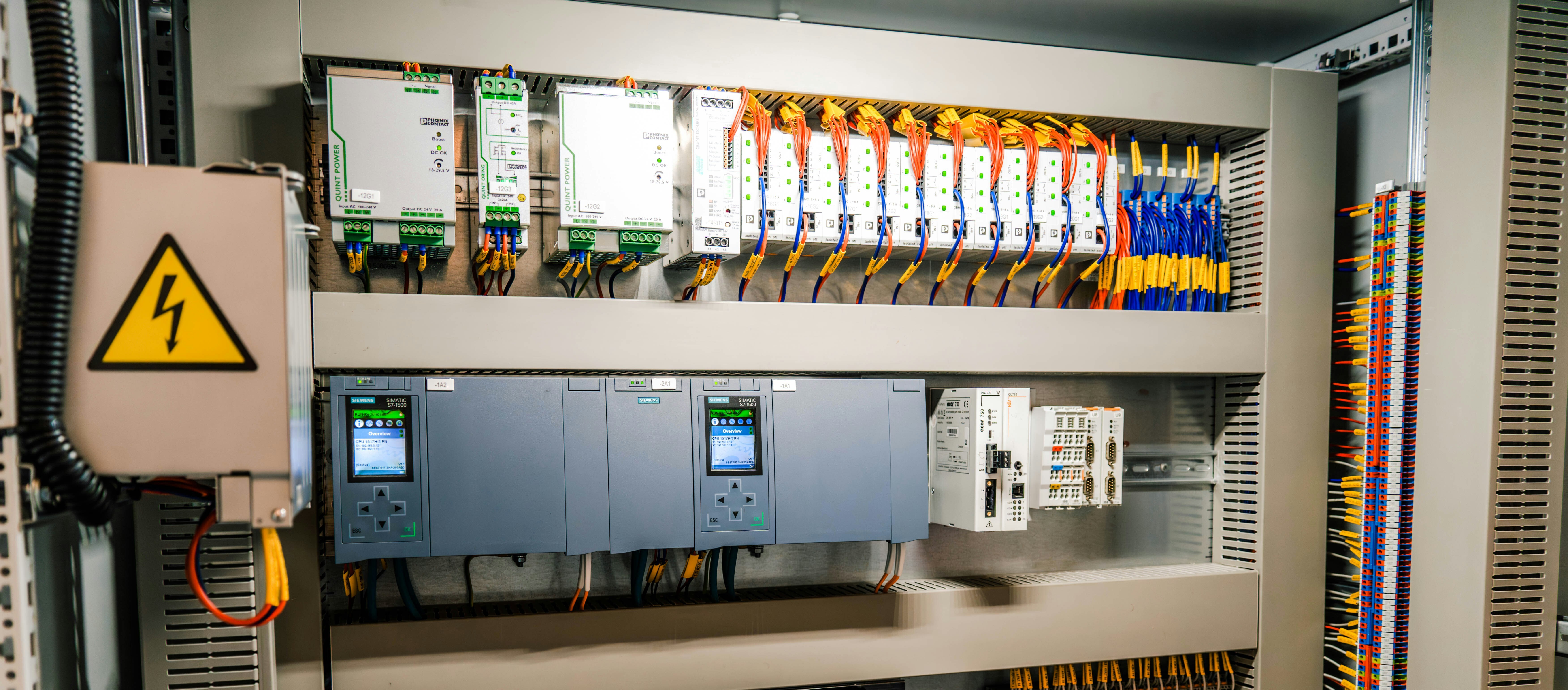
A well-equipped control cabinet needs terminal blocks for power and signal distribution, DIN rails for component mounting, wiring ducts for cable management, cable glands for ingress protection, filter fans or thermostats for climate control, LED lighting for maintenance visibility, and EMC shield clamps for interference suppression. The global electrical enclosure market, which includes control cabinets and their accessories, is projected to grow from USD 8.32 billion in 2026 to USD 15.16 billion by 2034 at a 7.80% CAGR, according to Fortune Business Insights. Buyers can start from a directory of control cabinet suppliers, then check the accessory categories, standards, price bands and verified suppliers covered below.
Key Takeaways
- A control cabinet requires at least seven accessory categories: terminal blocks, DIN rails, wiring ducts, cable glands, climate control components, LED lighting and EMC shield clamps, each serving a distinct function in power distribution, cable routing, thermal management or electromagnetic compatibility.
- The connector terminal block market alone was valued at USD 3.74 billion in 2025 and is forecast to reach USD 6.5 billion by 2035 at a 5.6% CAGR, driven by industrial automation and control-panel densification, per WiseGuy Reports.
- Compliance follows BS EN 61439-1/-2 for low-voltage switchgear assemblies and BS EN 60204-1 for machine electrical equipment, with DIN EN 60715 governing DIN rail dimensions and IP ratings defining ingress protection per IEC 60529.
- Professional buyers source accessories through verified B2B platforms, manufacturer direct channels and electrical distributors, with UK reference prices ranging from GBP 0.50 per DIN rail terminal block to GBP 800 for a cabinet heat exchanger.
What Essential Accessories Does a Control Cabinet Require?
Every control cabinet, whether it houses a simple motor starter or a full PLC-based automation system, requires a core set of accessories to function safely and remain serviceable. The table below categorises the essential items by function and explains why each one matters.
| Accessory Category | Function | Typical Products | Why It Matters |
| Terminal blocks | Power and signal distribution, wire termination | DIN rail terminal blocks, ground terminal blocks, fuse terminal blocks, disconnect terminals | Structured wiring, safe connections, easy maintenance and fault finding |
| DIN rails | Component mounting | TS 35 top-hat rail per EN 60715, mounting adapters, end brackets | Standardised mounting for terminal blocks, relays, contactors and PLC modules |
| Wiring ducts | Cable routing and management | Slotted PVC wiring ducts, flexible conduits, cable ties | Separation of power and signal cables, tidy cabinet internals, safe maintenance access |
| Cable glands | Cable entry and ingress protection | Metric brass or nylon glands (M12 to M63), EMC glands, ATEX glands | Maintains IP rating, provides strain relief, prevents dust and moisture ingress |
| Climate control | Temperature and humidity management | Filter fans, exhaust fans, thermostats, heater elements, heat exchangers | Prevents overheating, condensation and component failure |
| LED lighting | Maintenance visibility | Magnetic LED strip lights, door-switch lights | Safe inspection and fault-finding in dark or large enclosures |
| EMC shield clamps | Electromagnetic compatibility | Shield connection clamps, earthing braids | Compliant EMC earthing, prevents interference transmission |
The practical sequence of a cabinet build starts with the DIN rail layout, followed by terminal block population, then wiring duct routing, cable gland fitment and finally climate control and lighting. Skipping any of these steps risks a cabinet that is difficult to wire, hard to maintain or prone to thermal and EMC failures.
Which Terminal Blocks Should You Choose for Control Cabinet Wiring?
Terminal blocks are the single most specified accessory in any control cabinet. The choice depends on wire gauge, current rating, connection type and whether the circuit carries power, signals or both. The table below summarises the main types and their typical applications.
| Terminal Block Type | Connection Method | Wire Range | Typical Use | Key Advantage |
| Screw-type feed-through | Screw clamp | 0.2 to 95 mm² | Power distribution, main feeds | High clamping force, proven reliability |
| Spring-cage push-in | Spring or push-in | 0.2 to 16 mm² | Signal wiring, sensor connections, PLC I/O | Tool-free or single-tool connection, vibration-resistant |
| Disconnect terminal | Screw or spring | 0.5 to 16 mm² | Measurement circuits, test points | Isolation without disconnecting wires |
| Ground (PE) terminal | Screw or spring | 0.5 to 35 mm² | Protective earth connections | Yellow-green housing, DIN rail earthing |
| Fuse terminal block | Screw | 0.5 to 10 mm² | Fused circuits for motor protection | Integrated fuse holder, compact footprint |
| Multi-level terminal | Screw or spring | 0.2 to 6 mm² | Space-saving multi-wire connections | Two or three levels in one housing width |
The plastic terminal blocks market was valued at USD 2,021.4 million in 2025 and is forecast to grow at 5.9% CAGR through 2036, with Phoenix Contact, WAGO and Weidmuller competing on push-in wiring breadth and control-cabinet accessories. For panel builders, the trend is towards push-in and pluggable designs that reduce wiring time and eliminate torque-dependent screw connections.
How Should You Manage Cables Inside a Control Cabinet?
Cable management inside a control cabinet determines how quickly a technician can trace a fault, replace a component or extend the system. Poor routing leads to crossed signal and power cables, electromagnetic interference and unsafe maintenance conditions.
| Cable Management Product | Purpose | Typical Sizes | Material | Installation Note |
| Slotted wiring duct | Horizontal and vertical cable routing | 25 x 40 mm to 60 x 100 mm | PVC, halogen-free PA | Mount on DIN rail or screw-fix; keep power and signal cables in separate ducts |
| Cable ties | Bundling and securing cables | 80 mm to 365 mm lengths | Nylon PA66, stainless steel | Use UV-stabilised ties for outdoor cabinets; avoid over-tightening |
| Cable entry plates | Structured cable entry through cabinet walls | Standard cut-outs 100 x 100 mm to 400 x 200 mm | Steel or plastic with rubber seals | Combine with cable glands to maintain IP rating |
| Cable glands | Sealed cable entry points | M12 to M63 metric | Nickel-plated brass, nylon, stainless steel | Match gland range to cable outer diameter; use EMC glands for shielded cables |
| Flexible conduit | Cable protection at door hinges and moving parts | 7.5 mm to 48 mm outer diameter | PA6, PP | Use with conduit fittings and strain relief clamps |
The routing rule is straightforward: power cables run in one duct, signal and fieldbus cables in a separate duct, and the two groups cross at right angles where they must meet. This separation reduces electromagnetic coupling and keeps the cabinet compliant with EMC requirements under BS EN 61439-1/-2.
What Climate Control Accessories Does a Control Cabinet Need?
Electronics inside a control cabinet generate heat. Without adequate ventilation or cooling, component temperatures rise above their rated limits, leading to premature failure, nuisance tripping and unplanned downtime. The climate control strategy depends on the installation environment and the heat load.
| Climate Control Product | Function | Typical Application | Key Specification | Reference Price Band (GBP) |
| Filter fan | Forced ventilation with dust filter | Indoor cabinets, light heat loads | Airflow 100 to 550 m³/h, IP54 filter | GBP 25 to 80 |
| Exhaust fan | Passive hot-air extraction | Cabinets with natural convection path | Airflow 50 to 200 m³/h | GBP 15 to 40 |
| Thermostat | Switch-on temperature control | Paired with fans or heaters | Adjustable 0 to 60°C, NO/NC contact | GBP 10 to 30 |
| Heater element | Condensation prevention | Outdoor or unheated indoor installations | 15 to 150 W, DIN rail mount | GBP 15 to 50 |
| Cabinet heat exchanger | Closed-loop cooling for dusty environments | Sealed cabinets in harsh environments | Cooling capacity 100 to 2,000 W | GBP 200 to 800 |
| LED cabinet light | Interior illumination for maintenance | All cabinet types | Magnetic mount, door switch, 5 to 15 W | GBP 10 to 45 |
The Health and Safety Executive reported 511,000 workers with a work-related musculoskeletal disorder in 2024/25, and poorly lit or overheated control cabinets contribute to unsafe maintenance conditions. A thermostat-controlled filter fan and an LED light with a door switch are the minimum climate and visibility package for most indoor installations.
Which Safety Standards Apply to Control Cabinet Accessories?
Control cabinet accessories must comply with a layered framework of product and installation standards. The core standards are BS EN 61439-1/-2 for low-voltage switchgear and controlgear assemblies, and BS EN 60204-1 for the electrical equipment of machines. Accessories such as terminal blocks, DIN rails and wiring ducts carry their own component standards.
| Standard | Scope | Relevance to Accessories |
| BS EN 61439-1/-2 | Low-voltage switchgear and controlgear assemblies | Defines temperature rise verification, short-circuit withstand and EMC requirements for the complete cabinet including all accessories |
| BS EN 60204-1 | Electrical equipment of machines | Requires protective conductors, PE terminal blocks and cable glands that maintain the enclosure IP rating |
| DIN EN 60715 | DIN rail dimensions for mounting low-voltage switchgear | TS 35 top-hat rail is the standard mounting profile for terminal blocks, relays and PLC modules |
| IEC 60529 | Degrees of protection provided by enclosures (IP code) | Cable glands and cable entry plates must maintain the declared IP rating of the enclosure |
| BS EN 60947-1/-2 | Low-voltage switchgear and controlgear | Terminal blocks rated above 50 V must meet insulation and temperature rise requirements |
| EN 55032 / EN 55035 | EMC emission and immunity for multimedia equipment | Shield clamps and earthing accessories must support EMC compliance of the installed system |
The practical procurement check is to request the declaration of conformity for each accessory, confirm the DIN rail profile matches EN 60715, and verify that cable glands carry the correct IP rating for the enclosure. The Provision and Use of Work Equipment Regulations 1998 require that all equipment, including control cabinets, is suitable for its intended use and maintained in a safe condition.
What Do Control Cabinet Accessories Cost in the UK?
UK reference prices for control cabinet accessories vary by brand, material and specification. The table below summarises typical price bands observed in October 2026 for standard industrial-grade components; actual prices depend on quantity, supplier and delivery terms.
| Accessory | Reference Price Band (GBP) | Notes |
| DIN rail terminal block (single, screw type) | GBP 0.50 to 3.00 | Depends on wire gauge and brand; Phoenix Contact, WAGO and Weidmuller at the premium end |
| DIN rail terminal block (push-in type) | GBP 1.00 to 5.00 | Higher unit cost but faster assembly |
| DIN rail TS 35, 1 metre length | GBP 2.00 to 6.00 | Steel, zinc-plated; perforated versions cost more |
| Slotted wiring duct, 2 metre length | GBP 3.00 to 10.00 | PVC; halogen-free versions at a premium |
| Metric cable gland (brass, M20) | GBP 1.50 to 5.00 | Nylon glands are cheaper; EMC glands cost more |
| Filter fan unit | GBP 25 to 80 | Depends on airflow rating and filter class |
| LED cabinet light with door switch | GBP 10 to 45 | Magnetic mount versions are popular for retrofits |
| Shield clamp for EMC earthing | GBP 3.00 to 15.00 | Depends on cable diameter range |
| Cable ties (pack of 100) | GBP 2.00 to 8.00 | Nylon PA66; stainless steel ties cost significantly more |
| Thermostat, adjustable | GBP 10 to 30 | With bimetal sensor or digital probe |
Total cabinet accessory cost typically runs at 15 to 25% of the empty enclosure price. Investing in quality terminal blocks and cable management saves labour time during assembly and reduces fault-finding time throughout the cabinet's service life.
Which Suppliers Sell Control Cabinet Accessories Online?
Professional buyers source control cabinet accessories through manufacturers, specialist distributors and B2B supplier platforms. The table below profiles six suppliers verified on a leading B2B directory, each with a company profile confirming control cabinet accessory ranges.
| Supplier | Location | Established | Size | Specialisation |
| Richter Elektrotechnik GmbH & Co. KG | Niederdreisbach, Germany | 1995 | 20 to 49 employees | Control cabinet fans with filters, LED lights with motion sensors, thermostats, terminal blocks; manufacturer with own production |
| Wieland Electric GmbH | Bamberg, Germany | 1910 | More than 1,000 employees | Terminal blocks with spring connection, pluggable PCB terminals, industrial connectors, LED lighting on energy bus systems |
| ONELECS ELECTRICAL PRODUCTS | Istanbul, Turkiye | 2019 | 20 to 49 employees | Cable trunking, cable glands, DIN rail terminal blocks, cable ties, LED lighting, electrical enclosures |
| TERMINALSAN | Istanbul, Turkiye | 2009 | 20 to 49 employees | Cable trunking, cord end terminals, cable lugs, ring terminals; manufacturer using 99% copper |
| TBLOC ELEKTRIK ELEKTRONIK A.S. | Izmir, Turkiye | 2020 | More than 1,000 employees | Screw and spring terminal blocks, cable channels, cable glands, marking products; KEMA certified |
| Das Company Engineering Ltd. | Varna, Bulgaria | 2017 | 10 to 19 employees | Cable glands (Eaton brand), DIN rail terminal blocks (Weidmuller brand), industrial automation from ABB, Schneider, Siemens |
When vetting a new supplier, request the declaration of conformity for the specific terminal block or accessory range, confirm the supplier is an authorised channel for the brands it lists, and check whether they stock matching accessories such as markers, jumpers and end brackets. A supplier that carries the full ecosystem reduces the risk of mismatched parts.
Which Questions Do Buyers Frequently Ask About Control Cabinet Accessories?
Q: What is the most important accessory in a control cabinet?
A: Terminal blocks. They connect every wire in the cabinet, and their quality directly affects connection reliability, maintenance speed and safety. Push-in terminal blocks from established brands reduce wiring time by up to 70% compared with screw types, while maintaining vibration-resistant connections that do not loosen over time.
Q: How do I choose the right cable gland for my control cabinet?
A: Match the gland thread size (metric M12 to M63) to the cable outer diameter, select the material (nylon for general use, nickel-plated brass for mechanical strength, stainless steel for corrosive environments) and confirm the IP rating matches the enclosure. For shielded cables, use an EMC gland that connects the cable shield to the enclosure for proper earthing.
Q: Do I need climate control in every control cabinet?
A: Not every cabinet needs active cooling, but every cabinet benefits from at least passive ventilation. A filter fan is the minimum for indoor cabinets with variable frequency drives or power supplies that generate heat. Outdoor cabinets or installations in unheated buildings may also need a heater element to prevent condensation. The Manual Handling Operations Regulations 1992 require that equipment is designed to minimise maintenance risks, which includes safe internal temperatures.
Q: Can I mix terminal block brands in the same cabinet?
A: Yes, but it is not recommended. Each brand has its own housing dimensions, jumper compatibility and marking system. Mixing brands creates visual inconsistency, complicates spare stocking and increases the risk of using incorrect jumpers or markers. Standardise on one terminal block family per cabinet wherever possible.
Where Can You Start Comparing Control Cabinet Accessory Suppliers?
Buyers who have fixed their specification can shortlist suppliers through specialised directory pages. The terminal blocks supplier directory lists manufacturers and distributors of DIN rail terminal blocks, the electrical enclosures category covers complete cabinets and accessories, and the cable glands category adds sealed entry solutions. Comparing several verified profiles side by side before requesting quotes is the same discipline this article recommends for specification.
Find verified control cabinet accessory suppliers
Browse the control cabinet accessories directory on europages
Sources
- Fortune Business Insights, "Electrical Enclosure Market Size, Share & COVID-19 Impact Analysis", 2026: https://www.fortunebusinessinsights.com/electrical-enclosure-market-109042
- WiseGuy Reports, "Connector Terminal Block Market Research Report", 2026: https://www.wiseguyreports.com/reports/connector-terminal-block-market
- Future Market Insights, "Plastic Terminal Blocks Market", July 2026: https://www.futuremarketinsights.com/reports/plastic-terminal-blocks-market
- Health and Safety Executive, "Key figures for Great Britain 2024 to 2025", hse.gov.uk: https://www.hse.gov.uk/statistics/overview.htm
- BS EN 61439-1/-2, "Low-voltage switchgear and controlgear assemblies", BSI.
- BS EN 60204-1, "Safety of machinery. Electrical equipment of machines", BSI.
- DIN EN 60715, "Dimensions of low-voltage switchgear. Standard mounting rail", DIN.
- The Provision and Use of Work Equipment Regulations 1998 (SI 1998/2306), legislation.gov.uk: https://www.legislation.gov.uk/uksi/1998/2306/contents/made
- The Manual Handling Operations Regulations 1992 (SI 1992/2793), legislation.gov.uk: https://www.legislation.gov.uk/uksi/1992/2793/contents/made
