Short answer:
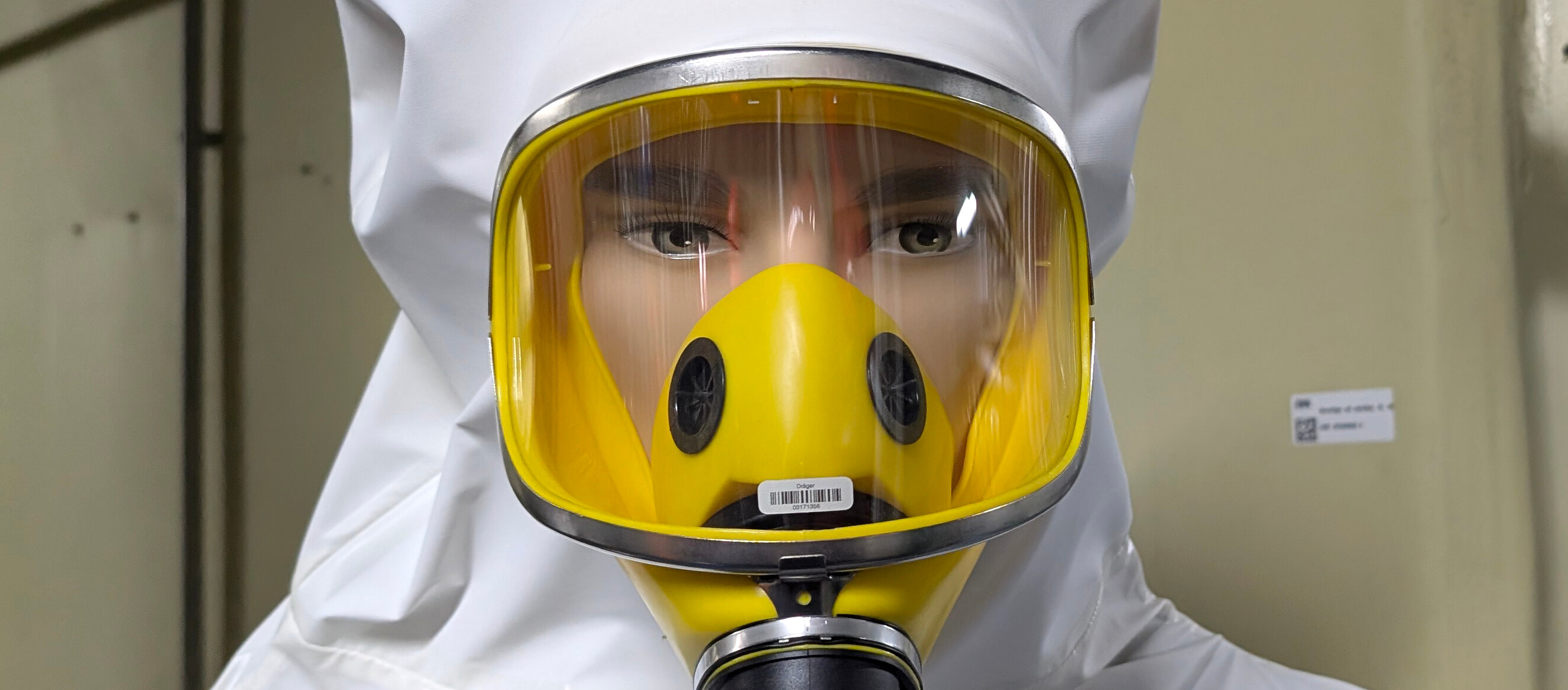
When buying a gas mask, the critical European standards are EN 136 (full face masks), EN 140 (half masks) and EN 14387 (gas filters). Every product must carry CE marking under EU Regulation 2016/425. In most European jurisdictions, employers must also conduct fit testing for each wearer before first use. Verified supply sources include authorised distributors listed on B2B platforms and manufacturers with EU operations.
Key Takeaways
- CE marking under EU Regulation 2016/425 (Category III) is mandatory — no gas mask may be placed on the EU market without it.
- The filter class (A, B, E, K, ABEK) determines which hazardous substances the mask protects against — selection must match the exact working environment.
- European employers must arrange fit testing for every wearer and repeat it at least annually, in line with national implementing legislation.
- Supply sources should be verified manufacturers or authorised distributors with EU premises — this ensures regulatory compliance and reliable after-sales support.
What market data is relevant when buying a gas mask?
The global respiratory protective equipment (RPE) market reached approximately $115.5 billion in 2025 and is projected to grow to $125.3 billion in 2026 — an 8.5 % increase within a single year (The Business Research Company, 2025). Europe accounts for roughly 30 % of the worldwide PPE market, driven by stringent workplace safety regulations and sustained investment in industrial protection.
The European respiratory protection segment alone is growing at a CAGR of 5.1 %, fuelled primarily by demand from the chemical, pharmaceutical, metals-processing and fire-service sectors. The industrial respiratory mask sub-market was valued at $42.3 billion globally in 2024 and is expected to reach $58.5 billion by 2031 (Fortune Business Insights, 2026).
| $115.5 bn | 30 % | 5.1 % |
| Global RPE market 2025 | Europe's share of the PPE market | CAGR European respiratory protection |
| 6+ | Cat. III | $58.5 bn |
| EN standards for gas masks | PPE risk category (highest level) | Industrial respiratory mask market 2031 |
Which standards and certifications apply to gas masks?
Gas masks sold in Europe are subject to a comprehensive framework of product standards, test methods and approval rules. The table below summarises the most relevant norms:
| Standard | Scope | Test parameters | Classification |
| EN 136 | Full face masks | Leakage, field of vision, breathing resistance, material durability | Class 1 (light), 2 (general), 3 (heavy-duty / firefighting) |
| EN 140 | Half masks and quarter masks | Seal integrity, breathing resistance, field fit | For negative-pressure, powered and supplied-air systems |
| EN 14387 | Gas filters and combined filters | Adsorption capacity, breakthrough time | Type A (organic), B (inorganic), E (acid), K (ammonia) |
| EN 143 | Particle filters | Filtration efficiency | P1 (low), P2 (medium), P3 (high) |
| EN 12942 | Powered filtering devices with mask | Fan performance, filter efficiency, battery life | Combined with full/half mask |
| EN 529 | Selection, use, maintenance | Guidance document for users | Recommendation (not a product test) |
All gas masks placed on the European market must comply with EU Regulation 2016/425 on personal protective equipment. Because gas masks protect against lethal hazards, they fall into Category III - the highest risk class. This means that in addition to an EU type-examination by a Notified Body, ongoing production surveillance is required.
Most EU member states also impose national rules on the occupational use of respiratory protection. In the UK, the Health and Safety Executive (HSE) requires employers to provide suitable RPE, conduct fit testing for every wearer and maintain a written respiratory protective equipment programme.
What does the European supplier landscape look like?
The European respiratory protection market is served by a mix of specialised manufacturers and broad-line occupational safety distributors. Major production sites are concentrated in Germany, the United Kingdom, France and Italy. Leading manufacturers have been developing respiratory technology for over a century — the product maturity is correspondingly high.
Supply chains have regionalised significantly in recent years: European buyers benefit from short lead times (2–5 working days within the EU/UK) and direct access to technical support. Custom configurations (e.g. specialised filter combinations or prescription lens inserts) are typically available from most manufacturers at minimum order quantities of 50–100 units.
| Supplier | Location | Established | Size | Specialisation |
| Dräger Safety UK Ltd | Blyth, United Kingdom | 1889 | 200–499 employees (UK); 16,000+ globally | Full masks, powered respirators, gas detection, chemical protection |
| Moldex-Metric AG & Co KG | Nottingham, United Kingdom | 1989 | 20–49 employees (UK) | Respiratory protection, half masks, filters, disposable masks |
| JSP | Witney, United Kingdom | 1964 | 20–49 employees (UK) | Safety equipment, respiratory protection, PPE systems |
What quality stages and verification procedures must gas masks pass?
Quality assurance when purchasing gas masks breaks down into three phases that every buyer should work through systematically:
Phase 1 - Supplier qualification: Verify that the manufacturer holds a valid CE certificate issued by a Notified Body (e.g. BSI, TÜV, DEKRA, SGS). Request the certificate of conformity and the test report. Confirm that the Notified Body is listed in the EU NANDO database.
Phase 2 - Product verification: Request samples and check: Are the masks correctly marked (CE mark, standard number, filter type, colour code)? Does the build quality meet expectations (seamless sealing lips, robust bayonet connectors, clear visor material)?
Phase 3 - Operational verification: Under national implementing legislation (e.g. HSE RPE guidance in the UK), each mask wearer must undergo an individual fit test before first use. Document the results and repeat the test at least annually or whenever circumstances change (e.g. weight loss, new prescription glasses, facial scarring).
How do prices, MOQs and logistics work?
Gas mask prices vary considerably depending on mask type, filter class and certification level. The overview below is based on typical B2B prices in the European market:
| Product type | Price range (unit price) | Typical MOQ | EU/UK lead time |
| Half mask (EN 140), reusable | €25 – €80 | 10 – 50 units | 3 – 5 working days |
| Full mask (EN 136), Class 2 | €80 – €250 | 5 – 20 units | 5 – 10 working days |
| Gas filter ABEK2 P3 (combined) | €8 – €25 | 50 – 200 units | 2 – 5 working days |
| Powered filtering device (EN 12942) with full mask | €800 – €2,500 | 1 – 5 units | 10 – 20 working days |
| Escape mask (EN 403) | €40 – €120 | 20 – 100 units | 3 – 7 working days |
Prices depend on order volume and manufacturer. For large orders (500+ units), discounts of 15–25 % are common. Filters must be replaced regularly — factor ongoing replacement costs into your total procurement strategy. Shipping within the EU/UK is typically included in the price for standard orders or costs €10–€30 per shipment.
Budget vs. premium - what are the differences?
| Criterion | Budget option | Premium option |
| Price | €25 – €80 (half mask) | €150 – €300 (full mask Class 3) |
| Material | Standard silicone or TPE | Medical-grade silicone, hypoallergenic |
| Field of vision | Single lens, limited visibility | Panoramic visor, anti-fog |
| Filter options | Single filter types (A or P) | Combined ABEK-P3 filters, bayonet system |
| Certification | EN 140 / EN 136 Class 1 | EN 136 Class 3, EN 12942 |
| Usage duration | Short-term tasks (1–2 hours) | Extended shifts, powered assistance |
| Warranty | 1 – 2 years | 3 – 5 years, replacement programme |
How does the six-step procurement process work?
| 1 | Define technical requirements Identify the hazardous substances present (organic vapours, acids, ammonia, particles), their concentrations and the working environment (oxygen content, temperature). This determines the correct filter type (A, B, E, K, ABEK) and mask type (half/full face). |
| 2 | Evaluate supplier capability Check whether potential suppliers can provide the required CE certificates, are certified by a Notified Body in the EU, and can demonstrate references in your industry. |
| 3 | Verify samples and quality Request test samples and check build quality, labelling (CE mark, standard number, filter type, colour code) and fit. Conduct an initial fit test with the sample. |
| 4 | Confirm certification requirements Ensure all products are certified under EU Regulation 2016/425 (Category III) and comply with national implementing legislation. File all certificates in your occupational safety records. |
| 5 | Negotiate MOQ and pricing Negotiate tiered pricing, delivery terms (Incoterms) and payment conditions. Consider framework agreements with call-off quantities to avoid shortages of replacement filters. |
| 6 | Plan logistics and delivery Coordinate delivery, storage (dry, 5–25 °C, unopened shelf life up to 5 years) and internal distribution to end users. Set up a maintenance schedule for regular filter changes and fit-test renewals. |
What frequently asked questions do gas mask buyers have?
Q: What do the colour codes on gas filters mean?
A: The colour codes are defined in EN 14387 and provide an instant visual guide to which hazard group the filter protects against: Brown = Type A (organic gases/vapours), Grey = Type B (inorganic gases), Yellow = Type E (acid gases), Green = Type K (ammonia), White = particle filter (P1/P2/P3). Combined filters such as ABEK carry all four colours simultaneously (brown + grey + yellow + green).
Q: How often do gas filters need to be replaced?
A: Replacement depends on the filter class, contaminant concentration and wearing time. As a rule of thumb: Class 1 filters at 1,000 ppm, Class 2 at 5,000 ppm and Class 3 at 10,000 ppm. In practice, filters should be changed no later than when the wearer detects odour or taste of the contaminant. National legislation (e.g. HSE RPE guidance in the UK) requires regular inspection and documentation.
Q: Does every gas mask need CE marking?
A: Yes. Since EU Regulation 2016/425 came into force, all respiratory protective equipment sold in the EU must carry CE marking. Gas masks fall into Category III (lethal hazards), which requires an EU type-examination by a Notified Body and ongoing quality surveillance. Products without CE marking may not be placed on the market.
Q: What is fit testing and why is it important?
A: Fit testing verifies that the mask forms an adequate seal against the wearer's face. National legislation across Europe (e.g. HSE RPE guidance in the UK) requires every wearer to pass a fit test before first use with a tight-fitting mask. The test must be documented and repeated at least annually. Employers who fail to comply risk fines and may void their insurance coverage in the event of a workplace accident.
Q: Can I use a half mask instead of a full face mask?
A: Yes, half masks to EN 140 protect the respiratory tract but leave the eyes and face unprotected. They are lighter, less expensive and offer a wider field of view. However, for tasks involving irritating or corrosive gases/vapours that also endanger the eyes, a full face mask to EN 136 is mandatory.
Q: Which supply sources are recommended for gas masks in Europe?
A: Recommended sources include manufacturers with EU/UK operations and verified distributors on B2B platforms. Ensure the supplier stocks authorised products, can provide CE certificates of conformity and offers technical support for product selection. The respiratory protection directory on europages.co.uk provides a compact overview of verified suppliers.
Where can you find verified respiratory protection suppliers?
Selecting the right supplier is critical for employee safety and regulatory compliance. B2B platforms list only CE-certified products from verified manufacturers and authorised distributors.
Compare gas mask and respiratory protection suppliers on europages
Verified manufacturers, CE-certified products, direct contact options — find the right supplier for your application.
Sources
- The Business Research Company — Respiratory Protective Equipment Global Market Report 2025
- Fortune Business Insights — Personal Protective Equipment (PPE) Market Size & Share Analysis, 2026
- European Committee for Standardisation (CEN) — EN 136:1998, EN 140:1998, EN 14387:2004+A1:2008, EN 143:2000
- European Union — Regulation (EU) 2016/425 on personal protective equipment
- Health and Safety Executive (HSE) — Respiratory protective equipment: guidance for employers
- European Agency for Safety and Health at Work (EU-OSHA) — Dangerous substances and respiratory protection
